Why Storyboard Script Translation Matters More Than Ever in Cross-Border Short Drama Production
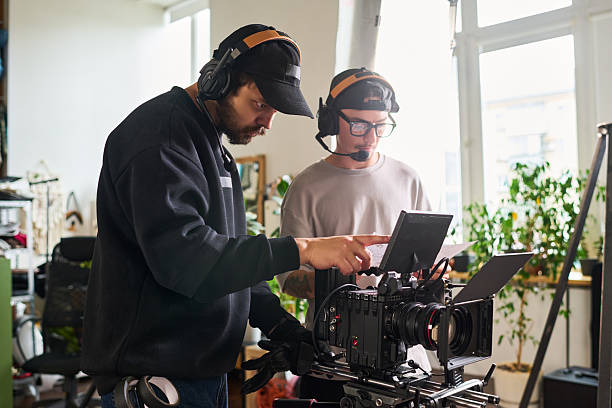
A director on a Los Angeles set opens the latest package from the writers’ room overseas. The storyboards look sharp—tight frames, clear emotional beats, camera moves sketched with precision. Then the notes start to blur. A parenthetical about “holding the reaction one more beat” reads flat in English. A framing instruction that carried quiet tension in the original language now sounds like a simple wide shot. The crew sets up based on what they have. Hours later the takes feel off. The rhythm that made the scene work on the page has slipped. Reshooting that sequence the next day burns budget, time, and morale.
This scene plays out more often than most producers admit as vertical short dramas scale across borders. The format has moved from niche experiment to serious commercial category. Industry research from Media Partners Asia shows the market outside China generated about $1.4 billion in 2024 and is projected to reach $9.5 billion by 2030 at a 28 percent compound annual growth rate. Omdia places the broader global figure near $14 billion for 2026. The United States already leads international revenue, while Southeast Asia and Latin America drive rapid download growth. Platforms and production companies increasingly co-develop or adapt material across languages. That expansion puts unusual pressure on one of the least glamorous documents in the pipeline: the storyboard script.
Storyboards for short dramas are not ordinary scripts. They combine dialogue with technical direction—lens choices, camera movement, duration of holds, emotional emphasis, transitions, and visual hierarchy. In a domestic production the original language carries shared assumptions about pacing and cultural subtext. Once the document crosses borders those assumptions break. Literal translation often strips the operational meaning. A note that signals restrained intensity in one storytelling tradition can register as detachment or confusion in another. Directors and post-production teams then interpret rather than execute. Communication loops lengthen. Assumptions multiply. A single ambiguous panel can cascade into wrong camera setups, mismatched coverage, or performances that miss the intended beat.
The financial stakes are concrete. Short-drama shoots typically run on compressed schedules measured in days rather than weeks. Crew, locations, talent, and equipment costs accumulate quickly. Industry accounts of feature productions show that translation delays alone have added more than a week to schedules in the past. On tighter short-drama budgets the same friction hits harder. Reshoots, even limited ones, consume resources that erode already narrow margins. Continuity problems or coverage gaps discovered in the edit rarely fix cleanly; they often force expensive pickups or post workarounds that delay release windows. In a market where platforms compete on volume and speed of new titles, those delays compound competitive disadvantage.
Cultural and visual grammar matter as much as vocabulary. Emotional restraint, power dynamics, humor registers, and even basic framing conventions travel unevenly. What reads as romantic tension in one market can land as controlling or unclear in another. Research and practitioner reports from the short-drama sector repeatedly link underperforming overseas titles not to weak source material but to insufficient cultural and dramatic adaptation in the production documents themselves. Effective storyboard translation therefore requires more than linguistic accuracy. Translators need fluency in screen language: how dialogue length affects performance rhythm, how action notes interact with camera movement, how emotional subtext survives (or fails) the move between cultures. The finished document should let a director from another market grasp not only what appears in the frame but why it appears that way and how surrounding shots support it.
Successful cross-border teams treat this work as part of production design rather than a late-stage language task. They involve translators early, supply visual references alongside text, and allow room for recalibration of pacing and register so the target-language version feels native to the shooting crew. The payoff is practical. Clearer communication reduces standby time, cuts the risk of mismatched coverage, and keeps post-production focused on enhancement rather than repair. In an industry already balancing high production volume against rising user-acquisition costs, those efficiencies protect both schedule and budget.
The same logic extends beyond the shoot. Accurate storyboard scripts feed cleaner workflows for editors, colorists, and localization teams handling subtitles or dubbing. When the original intent is preserved at the document level, later stages spend less energy reconstructing it. Platforms racing to fill catalogs across multiple languages gain a quieter operational advantage: fewer abandoned or heavily reworked projects, faster turnaround from script to release, and stronger emotional consistency for viewers who binge in short bursts.
Artlangs Translation has spent more than twenty years building the specialized capacity this work demands. With fluency across 230-plus languages and a network of more than 20,000 professional collaborating translators, the company has delivered extensive case work in video localization, short-drama subtitle localization, game localization, multilingual dubbing for short dramas and audiobooks, and multilingual data annotation and transcription. That depth of experience turns storyboard translation from a potential point of failure into a reliable production asset—one that helps international directors and post teams stay aligned, keep costs controlled, and deliver the tight emotional punches the format requires.