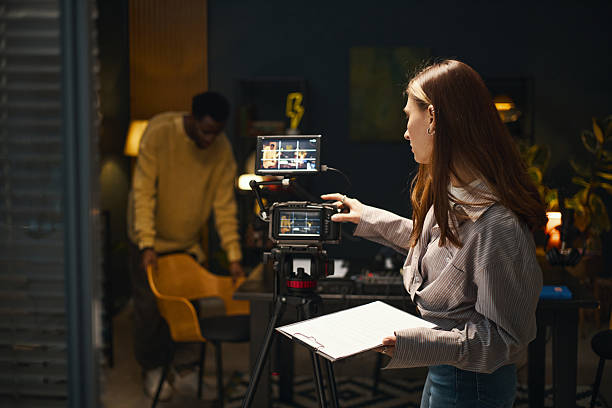
Why Native Expert Proofreading Is a Game-Changer for Short Drama Scripts
Short dramas hit different. Those quick, hook-heavy episodes pull you in and refuse to let go, turning spare minutes into full-blown binges. Chinese productions have led the charge, with the domestic market reaching around $7 billion in 2024 and the global scene on track to top $25 billion by 2030. The potential is enormous, but so is the risk of watching strong stories fizzle overseas—not for lack of talent or visuals, but because something in the language just feels... off.
It’s the little things that sting. A line meant to spark laughter lands flat. A tender confession sounds stiff and unnatural. A character’s sharp wit dulls into generic phrasing. Viewers might not always pinpoint exactly what’s wrong, but they feel it—and they rate it, comment on it, and move on to the next title. In the fast-moving world of short dramas, where retention and word-of-mouth decide everything, these subtle language slips can quietly kill momentum.
When “Close Enough” Isn’t Enough
I’ve seen producers pour heart into compelling plots and high-quality production, only to see international feedback focus on subtitles that feel translated rather than lived. Analyses of audience comments on Chinese dramas streamed abroad consistently show linguistic quality as one of the biggest pain points, right up there with storyline and acting. It’s rarely about outright mistakes. More often it’s that missing emotional texture—the rhythm of real speech, the cultural shading that makes dialogue breathe.
Think about how frustrating it is as a viewer: you’re invested in the characters, hanging on every exchange, and then a slightly awkward phrase yanks you out of the moment. For creators, it’s even more maddening—watching potential virality slip away because the words didn’t quite connect. In short dramas, where every second is precious and the story moves at breakneck speed, there’s no room for anything that breaks immersion.
This is precisely why native expert proofreading has become non-negotiable for anyone serious about global reach. A skilled native reviewer doesn’t just fix grammar or catch typos. They listen to the script like an audience member would. They feel where the tone wavers, where cultural references might confuse or offend, and where emotional beats need sharper delivery. It’s the difference between a competent translation and one that actually moves people.
Building Real Connection Across Borders
There’s something deeply satisfying about watching a well-localized short drama succeed internationally. The characters suddenly feel universal yet authentic, the humor lands, and the tension builds exactly as intended. Native proofreading is often the quiet hero behind those wins. It catches the nuances that literal translations miss and ensures the script respects both the original spirit and the target culture’s sensitivities.
Professionals in video localization repeatedly emphasize that native speakers bring an irreplaceable layer of naturalness and cultural insight. Automated tools and even fluent non-natives can produce understandable text, but only mother-tongue experts consistently deliver dialogue that sounds like it was written for that audience from the start.
For short dramas aiming at multiple markets at once, this step becomes even more valuable. What resonates in one region might need careful adjustment in another—humor styles, pacing of revelations, even expressions of emotion. Expert review helps navigate those differences without diluting the core story. The result? Higher completion rates, warmer reviews, and stronger platform performance.
Going Further Than Basic Translation
Many teams do solid initial translations and think they’re set. But the real magic often happens in that final polishing round. Native proofreaders refine character voices for consistency, tighten timing for subtitles or dubbing, and smooth out any lingering cultural friction. It’s the safeguard that turns good content into content that travels.
In a space as competitive and emotionally driven as short dramas, cutting corners on language quality is a gamble few can afford. The creators who invest in native-level expertise aren’t just protecting their work—they’re giving it the best possible chance to connect, entertain, and build loyal audiences worldwide.
Artlangs Translation has been supporting this kind of success for more than 20 years. Specializing in translation, video localization, short drama subtitle localization, game localization, multilingual dubbing for short dramas and audiobooks, as well as multilingual data annotation and transcription, the company works across more than 230 languages with a network of over 20,000 professional collaborators. Their focus on rigorous native quality control has helped numerous productions maintain authentic impact while expanding into new markets.