
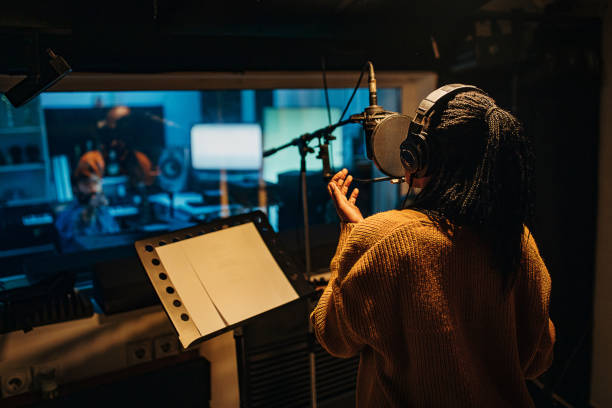
Why European Portuguese Dubbing Flops in Brazil – And How Authentic Brazilian Portuguese Voice Talent Wins the Telenovela Audience
Brazil's telenovelas aren't just entertainment—they're a cultural lifeline. These sprawling dramas, packed with romance, family intrigue, and emotional highs, draw in tens of millions of viewers week after week. One recent Globo hit reached over 125 million people in just three months, touching nearly 80% of households and boosting on-demand consumption by 12% on their streaming platform. Linear TV still makes up 79% of all video consumption in Brazil, with telenovela-style storytelling fueling everything from broadcast slots to mobile short dramas that now account for a huge chunk of Latin America's global downloads.
For content creators eyeing this massive audience—whether through Netflix, Globoplay, Prime Video, or international exports—the stakes are high. Brazil ranks as Netflix's second-largest market worldwide, with over 20 million subscribers and a deep appetite for dubbed or localized video. Yet many producers learn the hard way that simply translating into "Portuguese" isn't enough. The real difference lies between European Portuguese and the Brazilian variant, and ignoring it can tank engagement fast.
The Costly Mistake of European Portuguese Dubbing
A common slip-up happens when teams default to European Portuguese voice actors for Brazilian-targeted content. The accents, vocabulary, rhythm, and even emotional delivery feel off to local ears. Brazilian Portuguese is more open and syllable-timed, with warmer intonation that matches the expressive style Brazilians love in their telenovelas. European Portuguese often sounds clipped or formal by comparison, creating an immediate sense of distance.
One producer shared a blunt lesson: "We used European Portuguese and the Brazilians hated it." Comments flooded in—viewers called the dubbing "unnatural," "distant," or even "annoying." Drop-off rates climbed, shares plummeted, and negative feedback spread quickly on social platforms. This isn't rare. Forums and industry discussions echo the same frustration: Brazilian audiences, accustomed to high-production domestic dubs from Globo and others, spot the mismatch instantly and disengage. It's not just preference; it's cultural resonance. The wrong variant breaks immersion in stories built on raw emotion and everyday relatability.
Data backs this up. Brazil has one of the world's largest dubbing markets precisely because most viewers prefer dubbed content over subtitles for emotional clarity. Surveys show strong demand for native-sounding localization, especially in long-form dramas and series. When the voice doesn't match the market, even strong source material loses its pull. Platforms expanding into Brazil have adjusted by prioritizing Brazilian Portuguese talent to avoid these pitfalls and keep retention high.
Why Brazilian Portuguese Dubbing Delivers Results
Getting the variant right transforms performance. Native Brazilian voice actors bring authentic energy—the laughs land harder, the dramatic pauses feel natural, and slang or idioms adapt seamlessly without losing the original intent. This matters enormously for telenovela-style content, where character relationships and heartfelt moments drive binge-watching.
Successful localization goes beyond swapping words. It involves lip-sync precision, cultural nuance in dialogue adaptation, and casting that captures age, tone, and personality. Studios specializing in Brazilian Portuguese understand these layers, delivering dubs that feel like homegrown productions. The payoff shows in higher completion rates, better reviews, and stronger performance on streaming charts.
In a market where short dramas and telenovela-inspired series are exploding—particularly on mobile—authentic dubbing isn't optional. It's what turns international content into something Brazilians claim as their own. Producers who invest here see measurable lifts in engagement, especially as competition intensifies between global streamers and local powerhouses like Globoplay.
Choosing the Right Partner for Video Dubbing Success
Navigating these nuances requires experience. Effective Portuguese dubbing for the Brazilian market demands native Brazilian talent, deep familiarity with telenovela pacing, and technical excellence in audio syncing and quality control. Rushed or generic approaches fall flat, while thoughtful localization builds loyalty.
If you're preparing video content for Brazil—whether feature films, series episodes, short dramas, or promotional material—prioritize specialists who live and breathe the local variant. Test early with Brazilian focus groups if possible, and measure not just technical accuracy but emotional impact.
At Artlangs Translation, we've spent over 20 years honing our expertise in video localization and multilingual dubbing. We support more than 230 languages through a network of 20,000+ professional collaborators, many of whom are native Brazilian Portuguese specialists with proven track records in telenovela-style projects, short drama subtitling, game localization, audiobooks, and data annotation. Our team has handled numerous high-profile cases where getting the voice and cultural fit exactly right turned potential flops into audience favorites. Whether you need full dubbing, subtitling, transcription, or end-to-end localization, we bring the precision and insight that helps content thrive in demanding markets like Brazil. Reach out to discuss how we can support your next project—authentic connection starts with the right voice.




