
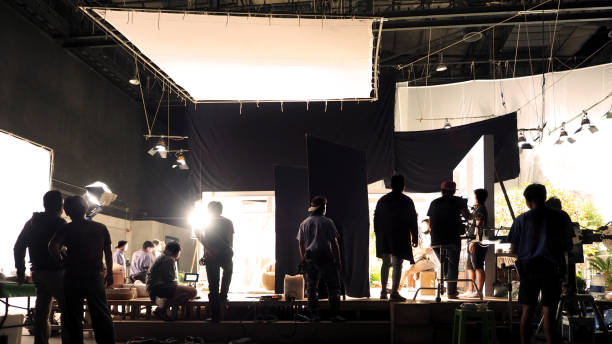
Why a Mistranslated Storyboard Script Can Ruin Your Cross-Border Shoot – And How to Fix It
When a Single Line in the Storyboard Can Derail an Entire Shoot
Creative teams pouring heart into a fast-paced Chinese short drama or an intimate indie game often dream big: bring in that talented director from overseas, hand the edit to a sharp post-production pro who just gets visual rhythm. The energy feels electric at first. Then the storyboard scripts land in their inbox, translated, and suddenly the magic frays. A camera move meant to build quiet dread comes across flat. An emotional beat that should land like a gut punch reads awkwardly technical. What was supposed to unify the vision starts pulling everyone in different directions.
It happens more often than outsiders realize. The short drama world has been on a tear—global in-app revenues for these bite-sized stories jumped from about $178 million in Q1 2024 to nearly $700 million in Q1 2025. Outside China, the market sat at $1.4 billion in 2024 and looks headed toward $9.5 billion by 2030. Everyone wants a piece of that momentum, especially when blending fresh international eyes can give a project that extra spark audiences crave in places like the US, Southeast Asia, or Latin America.
Yet the hidden toll shows up in the details. Misunderstood directions mean reshooting scenes that already ate into tight indie budgets. Editors waste hours trying to salvage footage that never quite matched the intended tone. Producers find themselves stuck in endless clarification loops across time zones, watching deadlines slip and frustration build. In game development especially, where narrative layers and visual cues intertwine so tightly, these gaps can force entire sequences to be rebuilt or voice assets re-recorded.
Industry voices have been pointing this out for years. Communication breakdowns consistently rank high among the headaches that drain developer satisfaction and project momentum. Broader studies paint an even starker picture: poor communication is quietly costing businesses enormous sums—estimates put the annual hit to US companies alone at around $1.2 trillion in lost productivity, rework, and missed opportunities. In creative fields like film and games, the pain feels more personal. It's not just dollars; it's the quiet disappointment when a scene that lived vividly in the original creator's mind falls flat on screen because something essential got lost between languages.
Think about the director in LA or London, staring at a translated storyboard note that describes a "subtle glance conveying betrayal." The words are there, but the cultural shading—the exact weight of that glance in the source context—might not travel intact. What follows is a flurry of messages, revised interpretations, and sometimes, a compromise that leaves everyone feeling the project lost a bit of its soul. That emotional cost lingers. Teams start second-guessing, creativity tightens, and the joy of collaboration dims.
Making the Bridge Stronger from the Start
The teams that handle this well treat storyboard script translation as something deeper than swapping vocabulary. They see it as preserving the heartbeat of the story—the pacing, the visual poetry, the unspoken cues that make a scene resonate. Good translators don't just know the languages; they understand how directors think, how editors cut, and how cultural storytelling rhythms differ without flattening them.
Practical habits make a real difference here. Getting specialized translators involved early, while the storyboard is still taking shape, helps catch ambiguities before cameras roll. Annotated files that sit alongside the frames—complete with notes on industry terms like "rack focus" or "Dutch angle," plus gentle explanations of emotional intent—cut down on guesswork. Iterative reviews let the foreign director push back directly, with quick, knowledgeable clarifications coming back from experts who grasp both worlds. When these notes live inside shared tools like Frame.io, feedback flows naturally instead of getting buried in email chains.
There's a quiet satisfaction in watching this work. Suddenly the overseas talent isn't just executing instructions—they're adding their own insightful layers because they finally see the full picture. The project gains depth rather than losing it. In an era when short dramas are adapting rapidly for global tastes, that kind of genuine co-creation turns potential friction into something exciting: stories that feel authentic yet freshly compelling across borders.
The financial side isn't abstract either. Rework from miscommunication can balloon timelines and budgets in ways that hurt small indie outfits the most. Those endless clarification hours add up fast, pulling focus away from what everyone actually loves—crafting compelling narratives and visuals.
Getting It Right Matters More Than Ever
As more creators look outward—adapting homegrown short dramas for international platforms or partnering on narrative games with talent from everywhere—the difference between smooth collaboration and constant firefighting often comes down to how well the foundational scripts travel.
Artlangs Translation has been quietly supporting this exact kind of work for over 20 years. With expertise across more than 230 languages and a network of over 20,000 professional collaborators, they've built a reputation for handling the nuances that creative projects demand. Their experience runs deep in video localization, short drama subtitle adaptation, game localization, multi-language dubbing for dramas and audiobooks, plus the detailed data annotation and transcription that often supports these pipelines. Many teams in media and indie gaming have turned to them when precision and cultural sensitivity weren't optional—they were what kept the vision alive and the production on track.
In the end, the best international collaborations don't erase differences; they honor them through clear, thoughtful communication from the very first storyboard frame. When language stops being an obstacle, the real creative sparks can fly—turning what could have been a stressful scramble into something that feels genuinely shared and stronger for it.
If your next project involves crossing borders with directors or post teams, investing early in accurate, context-rich storyboard script translation might just be the step that protects the heart of your story while keeping everyone moving forward together.




