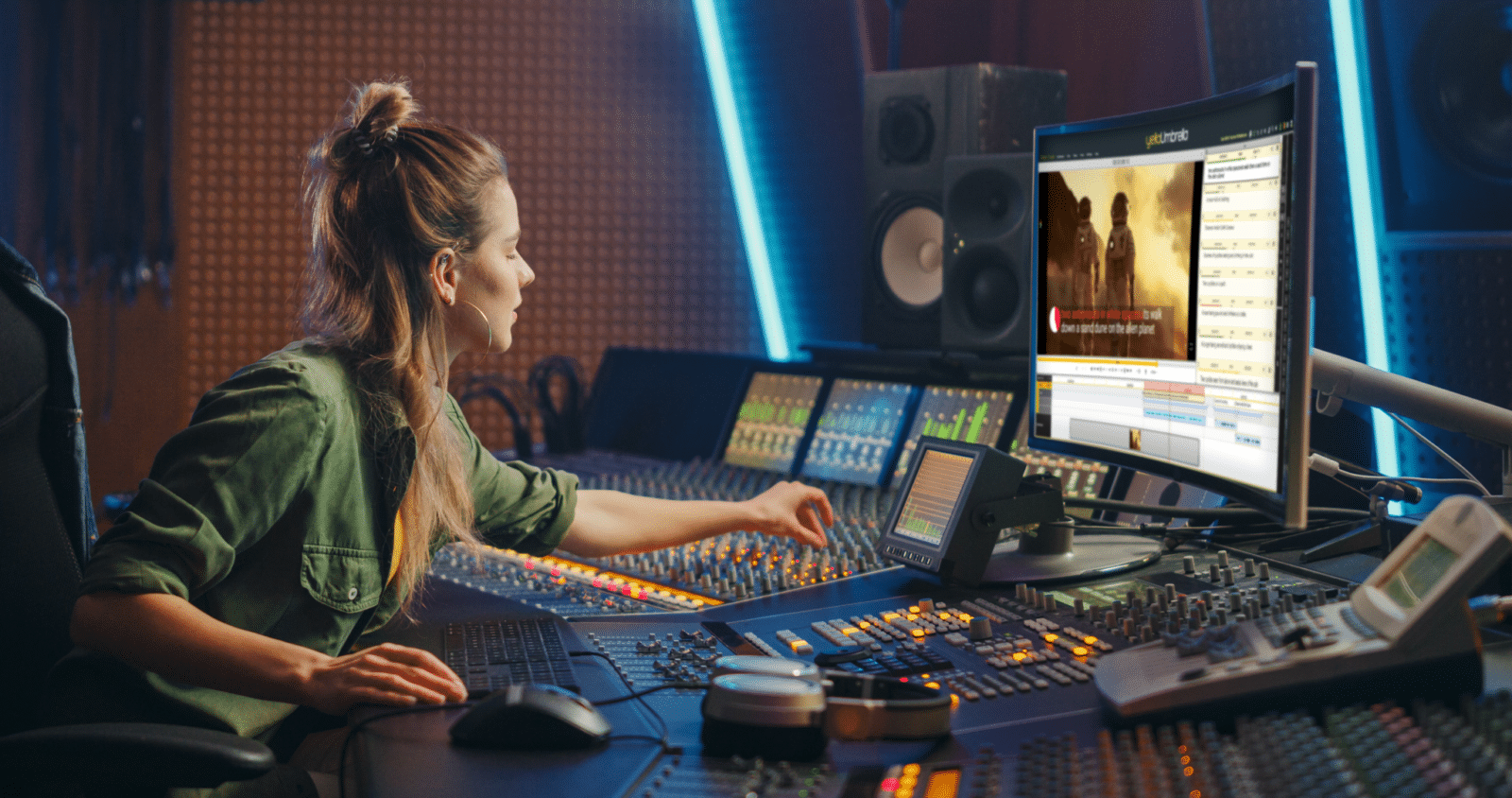
When English Meets Mandarin: Solving the Lip-Sync Puzzle in AI-Powered Video Dubbing
The toughest part about video dubbing has always been that invisible bridge between what someone says and how their mouth moves—especially when jumping between languages that don't play by the same rhythmic rules.
English to Mandarin Chinese is one of the trickiest pairings out there. English flows with stress-timed syllables that stretch or squash depending on emphasis, while Mandarin packs meaning into compact, tone-driven syllables that often clock in shorter overall. A straightforward script swap from English can shrink the Chinese version by 20-30% in syllable length, so the on-screen lips keep flapping long after the new audio has wrapped up. Go the other way—Chinese source to English target—and the translation bloats, forcing voice actors to rush or cram words, creating that telltale mismatch where the mouth snaps shut before the sentence ends. Human dubbing crews have spent decades wrestling with this through painstaking rewrites, isochrony tweaks (forcing lines to roughly match original timing), and careful viseme mapping—the visual mouth shapes for key phonemes like bilabials or fricatives. Even then, pros admit that perfect phonetic sync is rare; studies of actual dubbing practices show that only about 12-15% of on-screen moments achieve exact viseme alignment, yet viewers still buy in when the emotional rhythm and prosody carry over convincingly.
That's where newer AI systems are quietly rewriting the playbook. They don't just translate—they dissect source audio at the phoneme level, map equivalents across languages, then dynamically stretch or squeeze segments while holding pitch and timbre steady. For stubborn pairs like English-Chinese, models draw on huge bilingual training sets to anticipate where natural pauses should land or how emphasis needs to shift to avoid sounding forced. Some even nudge non-critical video frames subtly to buy extra milliseconds for longer phrases, all without obvious cuts. The result? Dubs that feel less like a clumsy overlay and more like the characters were always speaking the target language.
What really frustrates audiences, though, goes deeper than timing: that flat, robotic emotional delivery that yanks people right out of the story. Early synthetic voices prioritized crisp pronunciation over anything resembling human feeling—no subtle breath catches, no micro-shifts in intensity when tension builds. Viewers hated it, and rightly so. The breakthrough came with prosody modeling and style tokens in neural TTS, letting the system read context and infuse lines with joy, hesitation, sarcasm, or quiet intensity. Hybrid setups are proving especially powerful: AI lays down a fast, solid base track in minutes, then a director or voice specialist refines the emotional peaks. The difference is night and day—dubs now carry real weight, the kind that makes a corporate promo feel inspiring instead of corporate, or a documentary narration pull you in rather than lecture at you.
Speed and cost used to kill projects before they started. Traditional dubbing for a single feature could easily hit $50,000–$100,000 per language track and drag on for weeks or months. AI has flipped that equation hard: 70-90% cost reductions aren't uncommon, and turnaround can shrink to hours or a couple of days for shorter content. The numbers tell the story—the global AI video dubbing space sat around $31.5 million in 2024 and is racing toward hundreds of millions (some forecasts point to $397 million by 2032 at a blistering 44%+ CAGR in certain segments), fueled by streaming giants hungry to push titles into dozens of markets at once without breaking the bank.
Look at real cases that cut through the hype. Flawless AI's work on Watch the Skies (originally the Swedish film UFO Sweden) became the first full theatrical feature to use AI for visual dubbing—altering lip movements frame-by-frame so English audio synced perfectly while keeping the original actors' performances intact. Released in U.S. theaters via AMC in 2025 with SAG-AFTRA endorsement, it showed that ethical, consent-based AI can expand reach without subtitles stealing focus or alienating viewers who hate reading during action scenes. In games, expressive multi-voice AI now handles RPG ensembles with distinct character tones that don't collapse into monotone sameness. For brands, high-end corporate videos get that polished, native-level narration without the old delays or budgets.
The shift isn't about replacing humans—it's about letting technology handle the grunt work so creatives can focus on what actually moves people: nuance, cultural fit, genuine feeling. When done right, the tech disappears, and all that's left is the story landing exactly where it should.
That's the kind of precision and depth companies like Artlangs Translation have been honing for over 20 years. Specializing in translation, video localization, short drama subtitling, game localization, multilingual audiobooks, dubbing, and data annotation/transcription, they cover more than 230 languages with a network of 20,000+ certified, long-term partner translators. Their track record with complex, high-stakes projects across industries shows exactly why blending deep linguistic expertise with cutting-edge tools is what keeps global content alive and authentic as demand explodes.