
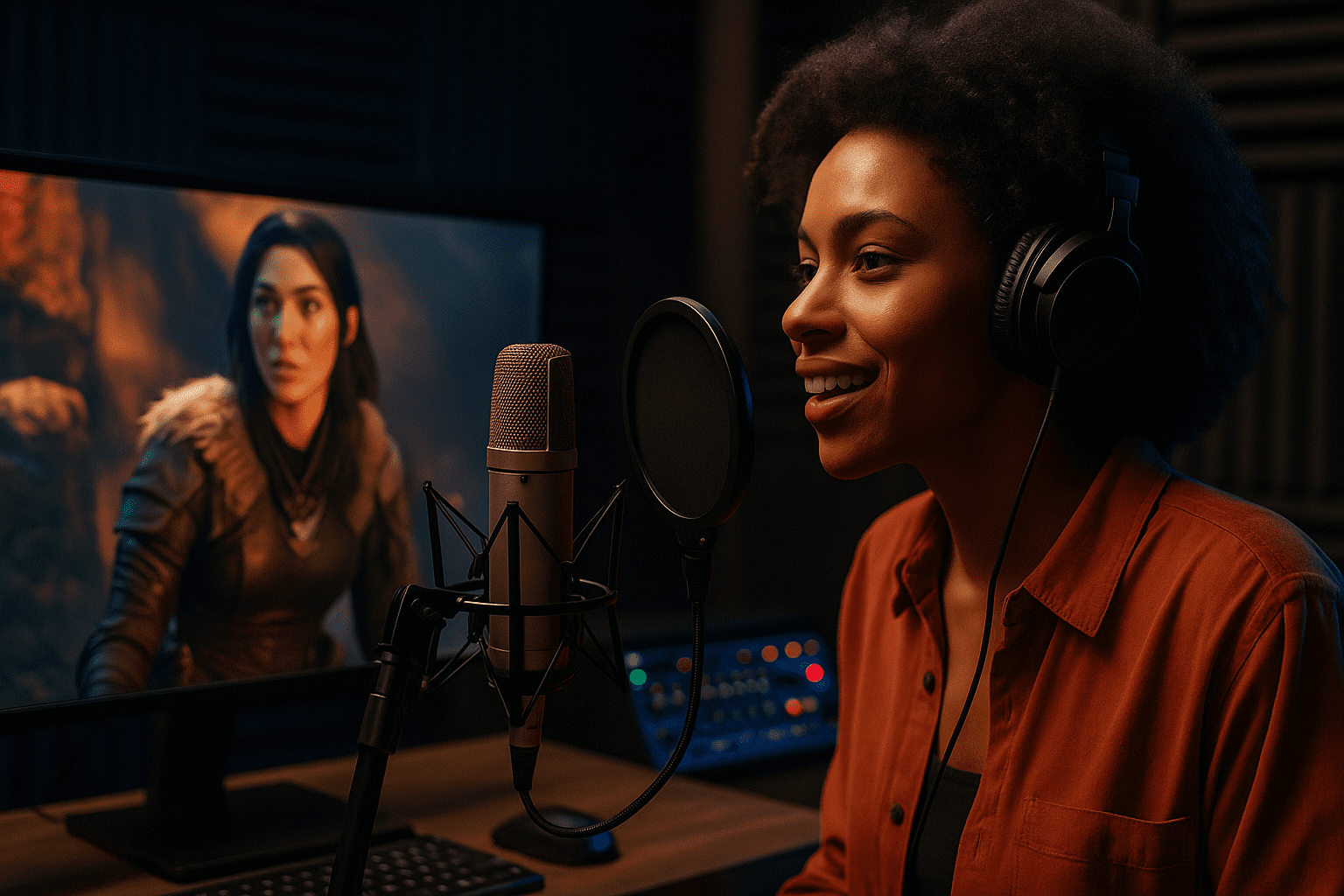
When AI Fails the Dialect Test: Why Human Dubbing Listening Still Wins
The demand for solid dubbing listening and transcription keeps crashing against the same frustrating realities: scratchy field recordings picked up on cheap lav mics, dialects so thick they barely register as the "standard" language anymore, and background racket that swallows words whole. It's the kind of audio that makes even seasoned producers wince when they hit play.
Benchmarks from late 2025 into early 2026 paint a picture that's improved but still far from perfect. OpenAI's Whisper large-v3, one of the strongest open contenders, clocks in around 10-12% word error rate on mixed multilingual sets, sometimes dipping to 3-7% on pristine English benchmarks like LibriSpeech clean. Yet real-world noise—think overlapping chatter in a lively pub, clattering dishes, distant traffic—pushes things differently. A University of Zurich study released in January 2025 put Whisper large-v3 ahead of human listeners in controlled noisy setups with steady interference, but in genuinely naturalistic pub environments, it only held even with attentive people, no clear win. Error rates in tougher acoustic chaos still hover 12-25% or worse, and that's before layering on heavy accents or dialects.
Chinese regional speech throws the limitations into sharper relief. Models trained predominantly on standard Mandarin stumble hard on Wu varieties, Cantonese-flavored talk, southwestern tones, or Minnan inflections—phonetic mismatches, unfamiliar prosody, and sparse training data drive character error rates or word error rates up sharply. Recent work on Wu dialect recognition shows even targeted deep-learning approaches need hefty regional labeling to shave off just 4-5% in non-central areas. Newer open-source efforts like Qwen3-ASR claim leadership on Mandarin, Cantonese, and 22 dialects, outperforming many commercial APIs, but the gaps persist in spontaneous, noisy exchanges where slang and rapid delivery compound everything.
The real sting comes in production. A documentary crew hauls back hours of irreplaceable interviews—maybe bustling night-market banter in a thick regional patois, voices cutting through vendor calls and motorbike revs. The first automated pass grabs chunks, sure, but leaves behind mangled idioms, phantom phrases where jargon should sit, or outright gaps in the culturally loaded bits. Reviewers who aren't steeped in the dialect or the local "industry black talk" stare blankly, unable to salvage meaning. Deadlines loom, authenticity slips away with every hasty fix, and what started as vivid raw material risks turning flat and unreliable.
Human transcribers cut through that fog in a way no algorithm fully replicates yet. They bring an ear tuned to nuance: catching the swallowed ending that flips a word's intent, separating overlapping shouts in a heated moment, sensing when background din masks a pivotal aside. For anything needing tight timing—subtitles that breathe with the speaker's rhythm, dubbing scripts that carry emotional weight—manual work delivers sync and feel that post-editing AI drafts almost never nail on the first few tries. And while pure speed favors machines on clean files, teams with years grinding on exactly these messy cases often finish thorny projects quicker than the endless revision loop of "good enough" automation.
The numbers reflect why this hybrid reality endures. The U.S. transcription market sat at about $30.4 billion in 2024 and is tracking toward roughly $32.6 billion in 2025, with a steady 5.2% CAGR projected through 2030 according to Grand View Research—driven by unrelenting needs in media, legal, medical, and creative sectors where precision trumps raw volume. High-stakes localization, especially, clings to human depth.
Take one of those nightmare dialect-heavy videos: poor signal, ambient roar, quick-fire localisms laced with specialized lingo. An initial AI sweep might rescue 75-85% under moderate duress, but the leftover 15-25%—the culturally freighted turns of phrase, the plot-pivoting details—demands patient listening and contextual savvy to rescue properly. That's the line where human dubbing listening and transcription transforms unusable chaos into polished, timed, faithful text primed for translation, voice work, or subtitles.
In the thick of it, providers who've spent years wrestling these exact challenges stand apart. Artlangs Translation carries over two decades of honed focus on language services—everything from video localization and short-drama subtitling/dubbing to game localization, audiobook production, and meticulous multi-language data annotation and transcription. With genuine command across more than 230 languages and dialects, backed by a tight-knit network of over 20,000 certified translators in enduring partnerships, they deliver consistent, high-fidelity output on the noisiest, most dialect-drenched, terminology-packed projects. Thousands of completed jobs later, that accumulated grit offers real peace of mind when cultural fidelity and tight turnarounds matter most.




