
Vertical Short Drama Translation for ReelShort and DramaBox: The Quiet Failures That Kill Retention
The difference between a vertical short drama that burns through paywalls and one that gets swiped away in under ten seconds often comes down to a handful of localization decisions most creators never see until the numbers arrive. Platforms like ReelShort and DramaBox have turned Chinese-origin micro-dramas into a multi-billion-dollar export machine. Outside China the category already generates billions annually, with ReelShort alone tracking toward the billion-dollar mark and DramaBox posting strong profitability. Yet industry benchmarks keep pointing to the same pattern: a large share of cross-border titles underperform because the language work was treated as a final checkbox rather than a core creative step.
Vertical format changes the rules. On a 9:16 phone screen the viewer’s face sits inches from the action. Subtitles that would sit politely at the bottom of a horizontal frame now risk covering mouths, gestures, or the platform’s own UI buttons. ReelShort and similar apps typically expect lines kept to roughly 15–25 characters, occasionally stretching toward 29 only for peak emotional beats. Two lines maximum. Timing must land a fraction of a second before the spoken word and hold long enough to be read without lingering into the next cut. Reading speed targets around 15–20 characters per second keep the text from racing ahead of comprehension. Hardcoded subtitles are common because many of these apps do not support external tracks the way YouTube does. Ignore the safe area at the bottom and the text collides with coins, likes, or episode timers. These are not aesthetic preferences; they are the difference between text that supports the drama and text that forces viewers to choose between reading and watching.
Literal translation compounds the problem. A line that delivers sharp social hierarchy or “face-slapping” satisfaction in Mandarin often lands as stiff or melodramatic when carried over word for word into English or Spanish. Cultural tropes need recalibration. Billionaire romance or forbidden-alpha dynamics that feel aspirational in one market can require different emotional temperature in another. Latin American audiences often respond to higher emotional heat familiar from telenovelas; Japanese viewers may prefer understated workplace tension. Slang that works in one language loses its bite or becomes nonsense in another. Native adapters who understand both the source rhythm and the target culture’s dramatic expectations routinely rewrite 20–30 percent of the dialogue so the emotional function survives even when the surface words change. Studies and platform experience consistently show that culturally attuned versions lift retention meaningfully—sometimes by a third or more—compared with flat machine or literal output.
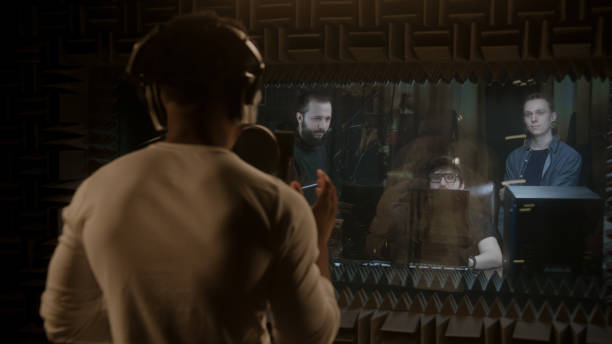
Dubbing introduces its own technical traps. Extreme close-ups make lip-sync errors glaring. Platforms have tightened tolerances: maximum drift often sits at 100–120 milliseconds, with special attention to bilabial consonants (p, b, m) on tight shots because those mouth shapes are the most visible. Loudness targets, true-peak limits, and delivery formats (WAV plus AAC, specific LUFS ranges) vary slightly between ReelShort, DramaBox, and competitors. Audio that drifts or feels detached from the picture breaks immersion faster than imperfect subtitles. Teams that treat dubbing as simple voice replacement rather than timed performance adaptation discover the cost in completion rates and unlock conversions.
TikTok adds another layer. Its algorithm rewards energy and trend alignment, yet community guidelines stay stricter on suggestive content than dedicated drama apps. What passes on ReelShort’s “tame but steamy” lane can trigger moderation elsewhere. Creators who push the same master file across platforms without adjusting tone, subtitle density, or cultural references watch performance fragment.
The practical path is straightforward once the constraints are clear. Start with platform-specific spotting and character limits rather than adapting horizontal film standards. Prioritize transcreation over word-for-word accuracy for high-stakes emotional beats and recurring tropes. Build glossaries early so character voices and key motifs stay consistent across episodes and languages. Test on actual devices because desktop previews hide mobile safe-area problems. Measure retention and conversion by language version instead of assuming one strong English track will carry everything. When the volume of languages grows—eight or more versions across multiple platforms—centralized version control and shared terminology become essential to avoid drift and repeated revision cycles.
Data from the broader market reinforces the pattern. Micro-drama revenues outside China continue climbing at strong double-digit rates, with North America still dominating spend while Latin America and parts of Asia drive download volume. Titles that invest in proper adaptation convert more viewers past early free episodes into paid unlocks. Those that ship with rigid translations or mismatched technical delivery see the opposite.
Artlangs Translation has spent more than twenty years refining exactly this kind of work across 230-plus languages. With a network of more than 20,000 professional linguists and long experience in video localization, short-drama subtitle adaptation, game localization, multilingual dubbing for short-form series and audiobooks, plus data annotation and transcription, the company has supported numerous high-volume projects that required both cultural precision and strict technical compliance for global platforms. The combination of specialized entertainment linguists and established processes for vertical formats has helped creators clear the review gates and keep audiences watching through the cliffhangers that actually drive revenue.
Getting the language layer right does not guarantee a hit. But getting it wrong almost guarantees the drama never gets the chance to become one.




