
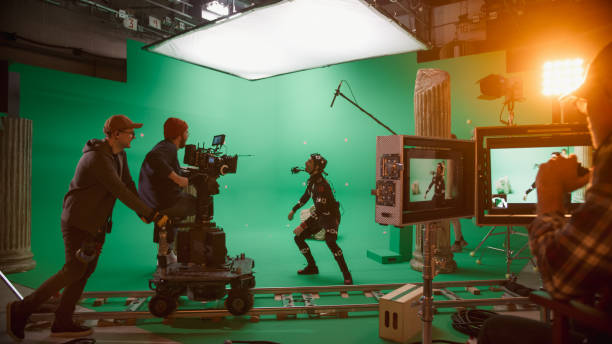
The Hidden Struggles Behind Turning Short Dramas into Global Hits
Those quick-hit short dramas have hooked millions. One tense argument, a shocking betrayal, or a heartfelt confession in under a minute—and viewers are scrolling for the next episode. But for teams trying to bring these stories to new languages and markets, the excitement often crashes against a frustrating reality: getting the words right in the first place.
Transcription sits at the heart of it all. Without clean, accurate text that captures who said what and when, subtitles feel off, dubbing falls flat, and the emotional rhythm that makes these dramas addictive gets lost in translation. It's not just about converting speech to text. The real headaches come from the chaotic, lively nature of the performances themselves.
When Voices Collide and Systems Break Down
Picture a heated family confrontation or friends trading rapid-fire banter. Characters overlap, cut each other off, or share similar tones. Automated tools frequently stumble here. Speaker diarization—the process of sorting out "who spoke when"—takes a beating in these moments. Studies on real-world multi-speaker audio show error rates spiking with overlaps and short bursts of dialogue, common in fast-paced dramas. What should be sharp, distinct lines blur into confusion, forcing editors to spend hours fixing attributions that kill the flow.
The frustration runs deep for producers. A single mislabeled line can shift the entire tone of a scene, making a tender moment seem sarcastic or turning conflict into nonsense. And it's not rare—background chatter, emotional delivery changes, and quick back-and-forths all pile on the difficulty.
Accents, Dialects, and the Authenticity Trap
Short dramas often lean into regional flavor to feel real. A character with a strong provincial accent, slang-heavy dialogue, or tonal nuances that carry meaning beyond the words. Generic speech recognition models, trained mostly on standard varieties, regularly miss these details. Research consistently shows higher word error rates for accented or dialectal speech, sometimes dramatically so compared to "neutral" voices.
This gap matters. Viewers connect with the raw energy and cultural texture. Lose that in transcription, and localization efforts risk producing something polished but soulless—subtitles that miss jokes, cultural references that land awkwardly, or dubbing that feels disconnected from the original heart.
Noise, Budgets, and the Daily Grind
Many short dramas are shot quickly on tight budgets. Street sounds, echoing rooms, or overlaid music become part of the mix. These real-world conditions hammer transcription accuracy, dropping performance well below what studio tests promise. Then comes the tedious part: manually aligning every line to the exact frame. For episode after episode packed with cuts, this eats up time that could go toward creative work or faster market releases.
It's exhausting work that delays everything downstream. Teams feel the pressure when a promising series risks losing momentum because the localization pipeline can't keep up.
Getting Closer to That Near-Perfect Mark
Hitting 98-99% usable accuracy isn't hype when the right mix comes together. Modern systems handle initial passes well on cleaner audio, but the magic happens in hybrid approaches: smart AI that learns from series-specific vocabulary and character profiles, paired with human experts who understand context, emotion, and cultural layers. This combination catches what pure algorithms overlook—subtle sarcasm, interrupted thoughts, or idioms that don't translate literally.
Recent insights from diarization research highlight how context and domain adaptation make a real difference, especially for short, overlapping turns that dominate drama dialogue. The payoff? Transcripts that preserve pacing and feeling, making subtitles pop and dubbing sound natural across borders.
In a booming market—where short drama platforms are seeing explosive growth and global revenues climbing into billions—the difference between good enough and truly immersive localization can decide success.
Why It All Matters
Flawed transcripts don't just create extra work. They risk pulling audiences out of the story, weakening the connection that drives binge-watching and shares. Done right, precise transcription and subsequent localization open doors to entirely new viewer bases, letting these compact, powerful tales travel and resonate far beyond their origin.
Artlangs Translation brings deep expertise to this space, with more than 20 years focused on multimedia and localization services. Supporting over 230 languages through a network of more than 20,000 professional collaborators, the company has built a solid reputation in video localization, short drama subtitle adaptation, game localization, multi-language dubbing for dramas and audiobooks, plus specialized data annotation and transcription. Their targeted experience helps content creators navigate these exact challenges and deliver results that honor the original storytelling while reaching global audiences effectively.




