
Noisy-Environment Transcription: Getting Frame-Accurate Results When the Audio Is a Mess
Anyone who has sat through a multi-person interview recorded in a café, a factory floor, or a crowded conference room knows the frustration. Voices overlap. Air conditioning drones. Someone laughs mid-sentence. A phone rings. What should have been a clean record of the conversation turns into an acoustic puzzle. Automatic speech recognition systems that claim near-human accuracy on studio material routinely fall apart here. Word error rates that sit comfortably under 5–7 % on clean English can climb past 20–25 % in a busy café and higher still once signal-to-noise ratios drop toward 0 dB. Studies of real meeting data show even steeper degradation on far-field microphones and overlapping speech. One evaluation of commercial systems on multi-speaker audio found average performance hovering around 62 % against human benchmarks that reached 99 %. Racial and accent disparities compound the problem: error rates for some speaker groups have been measured nearly twice as high as for others under identical conditions.
The practical consequences are immediate. A journalist loses hours replaying the same ten-second stretch. A researcher extracting insights from focus-group recordings ends up with transcripts riddled with “inaudible” markers and misattributed speakers. Non-native listeners or clients outside the industry struggle with slang, technical jargon, and regional pronunciations that machines simply never learned. Manual transcription by a generalist is slow—medium background noise alone can stretch the time required by 30 % or more, and heavy noise can double it—because the ear has to isolate signal from chaos, reconstruct context, and still deliver usable text.
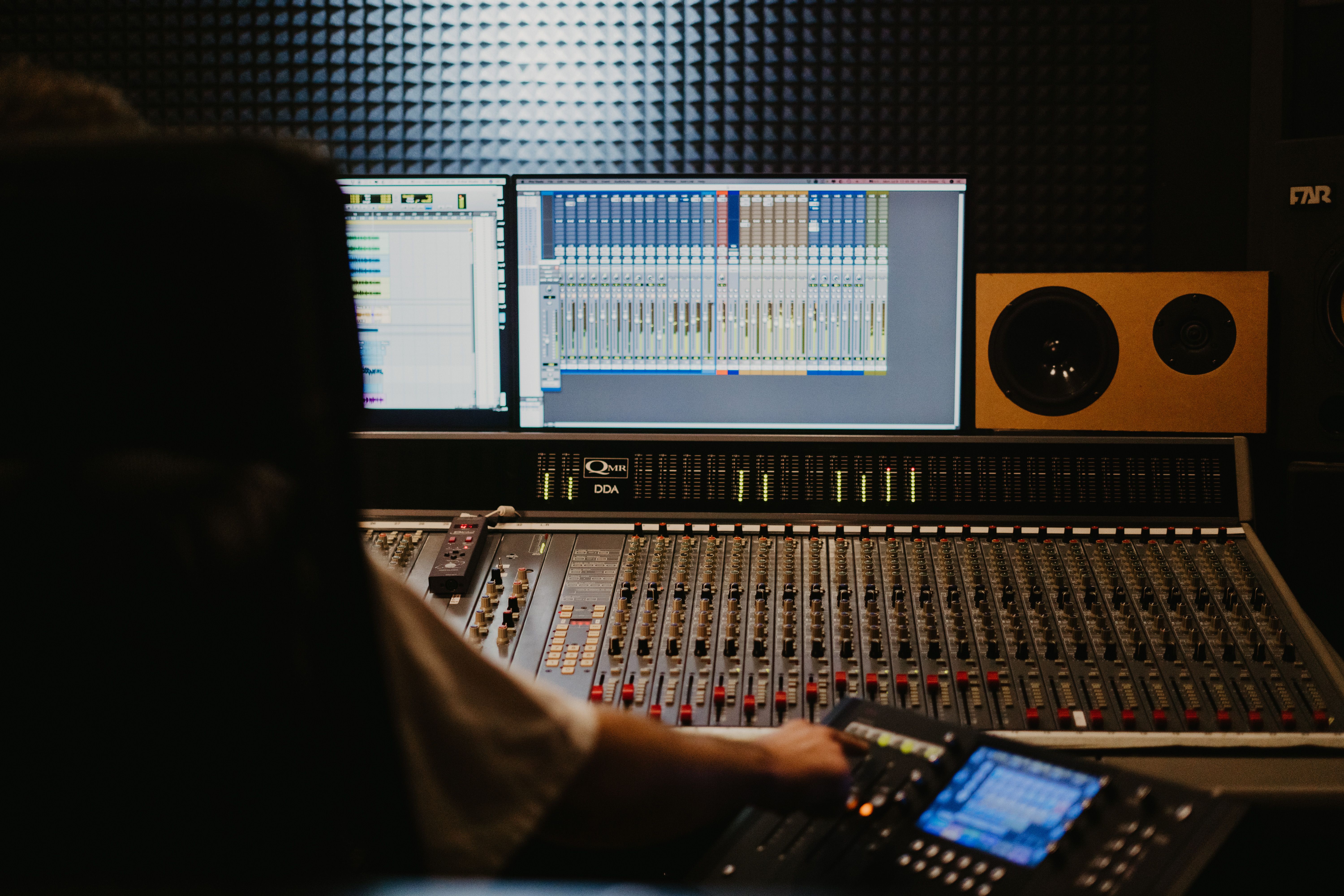
Professional audio organization treats the problem as a layered process rather than a single pass through software. First comes careful signal work: selective noise reduction that preserves the speech spectrum instead of over-processing it into artifacts, careful gain staging, and, where video exists, cross-checking visual cues. Overlapping speech is separated by repeated focused listening and, when necessary, by trained diarization review rather than relying solely on automated speaker labels that frequently swap identities mid-sentence. The resulting draft is never considered finished. Native or near-native linguists familiar with the relevant dialects, accents, and domain vocabulary then perform targeted proofreading. They catch the idioms a machine treats as noise, resolve ambiguous homophones through context, and flag residual uncertainty with precise markers instead of inventing words.
Timecodes are inserted at the required granularity—often to the second or finer—so that every line of dialogue can be matched back to the original media for editing, subtitling, or legal review. For projects that need more than a raw transcript, the same specialists extract keywords, recurring themes, and concise summaries. This turns hours of messy conversation into searchable, actionable material without forcing the client to re-listen to every second.
The difference between a usable transcript and an unusable one is rarely a single technological leap. It is the combination of acoustic cleanup, human ears trained on difficult material, domain knowledge that machines still lack, and rigorous quality control that keeps speaker attribution and timing accurate. When the recording is genuinely compromised—severe clipping, extreme reverberation, or dense babble—professionals will say so rather than deliver a polished-looking but unreliable file. That honesty saves downstream work.
Artlangs Translation has spent more than twenty years refining exactly these workflows across translation, video localization, short-drama subtitle localization, game localization, multilingual dubbing for short dramas and audiobooks, and multilingual data annotation and transcription. With a network of over 20,000 professional linguists covering more than 230 languages, the company routinely handles multi-speaker and noisy source material, delivering time-coded scripts, accent- and dialect-checked transcripts, and keyword-level summaries that clients can trust for production, research, or further localization.




