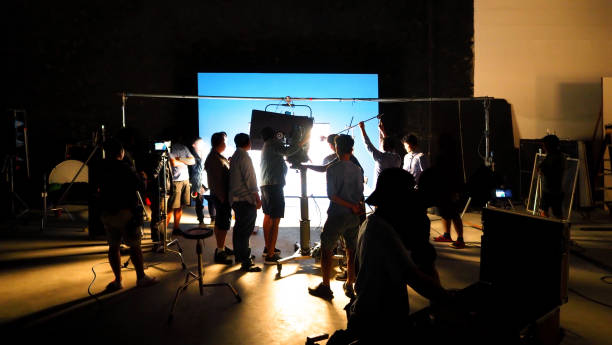
Mastering Multi-Voice Dubbing Production: A Practical Workflow for Directing Multiple Actors in One Video
When voice actors record their lines from separate locations, the final audio often feels disjointed. One voice carries the warm, intimate tone of a treated home studio, while another has the slight boxiness of an untreated room or a different microphone setup. The result? A track that pulls viewers out of the story instead of drawing them in. For video localization projects—whether short dramas, animated series, corporate explainers, or indie films—this inconsistency is one of the most common pain points production teams face.
High-quality multi-voice dubbing requires more than talented performers. It demands a deliberate directing and production workflow that treats the voices as elements of a single ensemble, even when recorded remotely. The global dubbing and voice-over market reflects the stakes: valued at roughly $4–6 billion in recent years, it is projected to grow at CAGRs between 7% and 9.7% through the mid-2030s, fueled by streaming platforms’ hunger for localized content and the expansion of short-form video and gaming.
Pre-Production: Building the Foundation
Success starts long before anyone hits record. Begin with a finalized, timed script that accounts for natural pauses, emotional beats, and lip-sync requirements where needed. Color-code lines by character to reduce confusion during sessions. Casting comes next: audition actors not only for linguistic accuracy and performance range but also for voice timbre compatibility. Think of it as assembling an orchestra—variety in tone and style matters, but the voices must sit together convincingly in the mix.
Provide each actor with a detailed character brief, reference clips from the original video, and mood boards or example performances. Share a style guide covering tone, pacing, energy level, and any cultural nuances specific to the target audience. This preparation minimizes wasteful retakes and helps actors internalize the project’s emotional world.
Technical consistency is equally critical. Require actors to use comparable recording setups (similar microphone models or at least equivalent quality) and send test files early. A professional audio engineer or dubbing director reviews these for room tone, noise floor, and frequency response. Small differences in home setups can be mitigated later, but major mismatches become expensive in post-production.
The Directing Session: Creating Unity Across Distances
Most modern multi-voice projects use remote recording with live direction via high-quality platforms or dedicated remote session software. The goal is to simulate a shared performance space even when actors are continents apart.
Schedule group read-throughs or staggered directed sessions. For key dialogue scenes involving interaction, having actors online simultaneously allows real-time reaction and chemistry—directors can cue overlapping lines, adjust timing on the fly, and give immediate feedback. One experienced voice director emphasizes designating a clear “captain” for the session to keep momentum and consolidate notes, avoiding the chaos of too many voices in the virtual room.
During recording, focus feedback on performance first—emotion, intention, rhythm—then on technical delivery. Ask actors to match energy to the on-screen action rather than their isolated booth. Record multiple takes with slight variations in pacing or intensity; this gives editors flexibility later. Encourage actors to listen to a low-volume guide track or previous takes from co-performers when appropriate, helping them respond naturally.
Breaks matter. Long sessions fatigue voices and reduce consistency. Build in short pauses and monitor for vocal strain, especially in emotionally demanding scenes.
Post-Production: Achieving Seamless Blend
This is where the “different rooms” problem gets solved. A skilled dialogue editor and mixing engineer become essential. They:
Normalize levels and remove unwanted noise while preserving natural room tone where it adds character.
Apply subtle EQ, compression, and reverb to create a unified acoustic space.
Use de-reverberation tools and spectral editing to tame inconsistent reflections from varied recording environments.
Fine-tune timing for lip synchronization or visual rhythm.
Advanced tools and experienced engineers can make disparate recordings feel like they were captured in the same well-treated studio. The key insight from many localization projects is that human oversight in mixing remains irreplaceable for emotional authenticity—AI can accelerate parts of the process, but it often struggles with subtle performance nuances and cohesive soundscapes.
Real-World Perspective and New Insight
Teams working on international streaming content have learned that treating remote multi-voice dubbing as a collaborative performance—not a series of isolated voice drops—dramatically improves audience retention. One recurring observation from directors is that investing time in pre-session calibration and live direction reduces post-production fixes by 30–50% in complex projects. The payoff appears in viewer engagement metrics: well-blended dubs help localized content feel native rather than translated.
A fresh angle many producers now embrace is hybrid workflows. Record principal emotional exchanges with live direction for chemistry, then handle straightforward narration or background lines asynchronously. This balances quality with scheduling realities in global talent pools.
Why Professional Expertise Makes the Difference
Handling multi-voice dubbing at scale requires more than good software and willing actors. It calls for teams who understand both the artistic and technical sides of localization—translators who adapt dialogue for natural delivery, directors experienced in remote ensembles, and engineers who know how to unify disparate recordings without flattening the life out of them.
For organizations expanding into new markets, getting this right directly impacts how audiences perceive the content. A polished, cohesive audio track signals respect for the viewer and confidence in the story.
At Artlangs Translation, we bring over 20 years of specialized experience in translation services, video localization, short drama subtitling, game localization, and multilingual voice production—including multi-voice dubbing for short dramas, audiobooks, and more. With proficiency across 230+ languages and a network of more than 20,000 professional collaborators, our teams have delivered hundreds of successful projects that overcome exactly these challenges. Whether you need full end-to-end multi-language dubbing, precise data annotation and transcription, or seamless integration of voice with visuals, we focus on delivering natural, immersive results that resonate with target audiences. Reach out to discuss how we can support your next video localization project.
Producing convincing multi-voice dubs in today’s distributed world is undoubtedly complex, but with a thoughtful workflow and the right partners, the separate recordings disappear—and only the story remains.