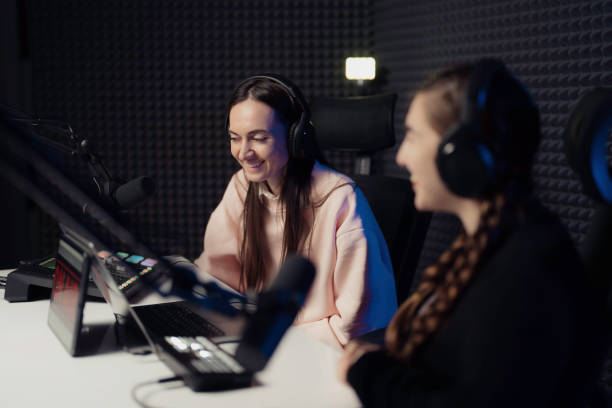
How Professional Video Dubbing Achieves Flawless Lip Sync – And Why It Matters for Global Content
The art of making dubbed voices blend seamlessly with on-screen lip movements has long been one of the trickiest feats in multimedia translation. It's not just about swapping words from one language to another—it's about preserving rhythm, emotion, and visual harmony so viewers forget they're experiencing a localized version at all.
The Core Challenge: When Dubbing Feels Off
Many companies hit the same walls when expanding video content globally. Corporate promotional films end up with voices that sound flat or mechanical, draining the energy from what should be an inspiring message. Game characters lose their personality across languages, making immersive worlds feel disconnected. And anyone who's sat through a dubbed video knows the frustration of mismatched timing—lips closing while words keep flowing, or vice versa—which pulls audiences right out of the experience.
These issues stem from three persistent pain points: stiff emotional delivery that makes performances feel robotic, accents that don't quite land as native, and the steep price tag or lengthy timelines of traditional studio work. A one-hour video can easily run $5,000 to $15,000 per language with human-only dubbing, plus weeks of scheduling and revisions. For businesses needing multiple markets, that adds up fast.
Unpacking the Technique: How Pros Achieve Perfect Lip Sync
At its heart, successful dubbing is a blend of linguistic adaptation, timing precision, and performance craft. Translators don't do literal word-for-word swaps. They reshape dialogue to match the target language's natural cadence while keeping the original meaning and emotional beat intact. Short syllables in English might expand in Romance languages, so scripts get tweaked for comparable mouth shapes and pacing.
Voice actors then step in, rehearsing against the visuals. They focus on visemes—the visual counterparts to phonemes (speech sounds). Plosives like "p" or "b" get aligned to clear lip separations, while open vowels match wider mouth openings. Tools like waveform analysis and frame-by-frame review help fine-tune, ensuring the new audio starts exactly when lips part and ends when they close.
In animation or games, it's even more deliberate. Animators often build from core mouth shapes—about five basic ones for many styles—and layer in breathing pauses or subtle head tilts to sell the performance. The result feels alive because every element supports the illusion that the character is truly speaking the new lines.
Recent advancements in AI-assisted dubbing have pushed this further. Neural networks now map audio to facial movements with high accuracy, sometimes hitting 95%+ lip-sync precision while retaining 90-95% of original emotional tones. These systems analyze vast datasets of human speech and visuals, then generate natural prosody—rhythm, pitch variations, and intonation—that avoids the monotone trap.
Yet pure AI still benefits from human oversight. Experts review for cultural nuance, brand voice consistency, and those tiny emotional shifts that make a performance resonate. Hybrid approaches deliver the best of both: speed from automation and authenticity from seasoned talent.
Real-World Impact and Fresh Perspectives
Look at how streaming giants have leaned into these techniques. Platforms using advanced dubbing report significant lifts in watch time—up to 78% in some cases—because viewers stay immersed longer when the audio feels native. One insight emerging from recent projects: mixed emotional content in dubbed videos can sustain engagement better than strictly positive or negative tones, as it mirrors real human conversation and keeps attention from drifting.
In corporate video production, professional narration that matches promotional energy transforms dry explainer films into compelling brand stories. Companies that prioritize native-level emotional range see stronger audience connection, especially in training or marketing materials where trust matters.
For games, multilingual voice outsourcing has become a game-changer. Titles that invest in character-specific dubbing across languages often see broader adoption, as players connect more deeply with roles that sound authentic rather than translated. The key new takeaway? Emotional AI modules are starting to control prosody in ways that link translated speech directly to lip data, reducing the "uncanny valley" effect that once plagued automated efforts.
Data backs the shift. The broader dubbing and voice-over market sits around $4.5–4.7 billion recently, with AI tools growing rapidly—some segments projected to expand at 13–44% CAGR through the early 2030s. Costs can drop 60–90% with smart AI integration, and turnaround times shrink dramatically, opening doors for smaller teams and faster global releases.
For enterprise promotional video professional voice talent booking, the focus stays on experienced narrators who can convey authority and warmth without sounding scripted. Natural and fluent AI video dubbing solutions now bridge gaps for high-volume needs, offering scalable options that still feel human when refined properly. And for game character multilingual voice dubbing outsourcing, specialized teams handle everything from script adaptation to multi-language recording, ensuring each hero or villain retains their distinctive flair.
The real art lies in balancing technology with expertise. Pure automation risks robotic stiffness or off accents, while old-school methods strain budgets and schedules. Hybrid models—leveraging AI for initial sync and pros for emotional polish—address these head-on, delivering results that engage rather than distract.
Artlangs Translation brings over 20 years of focused experience in translation services, video localization, short drama subtitling, game localization, and multilingual dubbing for short dramas and audiobooks. With mastery across more than 230 languages and a network of over 20,000 professional collaborators, the team has built a strong track record of high-quality projects that help brands reach new audiences effectively. Their emphasis on precise, natural localization—including data annotation and transcription—makes them a reliable partner for organizations seeking seamless global expansion without compromising on quality or emotional impact. Whether it's refining a corporate film or scaling game voices, the approach consistently prioritizes that perfect marriage of sound and screen.