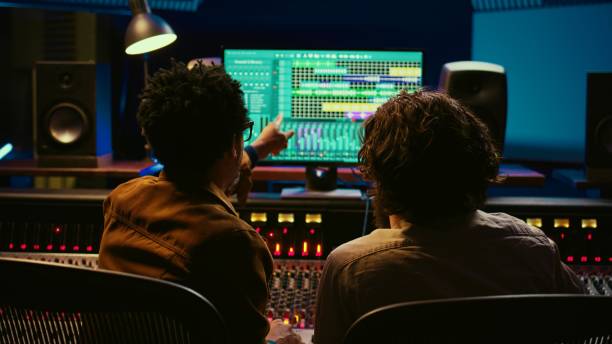
Turning raw audio into clear, reliable text and natural-sounding translations often feels more like detective work than a straightforward process. You sit with a recording that's muffled by wind, crowded with overlapping voices, or laced with heavy regional speech patterns, and suddenly every missed word or twisted idiom carries real weight—especially when the material is destined for a documentary, a short drama, or a global audience that expects authenticity.
The frustration builds quickly. Automated tools promise speed, yet they stumble hard on poor-quality files, thick accents, or the kind of insider slang that only someone immersed in the culture would catch. A Sichuan speaker blending local flavor into Mandarin, a fast-talking expert dropping industry shorthand, or field audio captured on a phone in noisy surroundings—these scenarios routinely push machine accuracy down into ranges that make the output barely usable without heavy manual cleanup. Real-world tests consistently show automated systems dropping to 60-80% accuracy or worse under such conditions, while experienced human listeners routinely clear 99% by understanding context, repairing speaker turns, and preserving emotional tone.
That gap matters. For filmmakers chasing a compelling story in remote locations, hours spent scrubbing through footage just to locate the right quote can drain momentum and budgets. Without properly time-stamped transcripts, editors lose precious hours rewatching segments instead of shaping narrative flow. Many documentary teams report that searchable, timed scripts dramatically cut research and assembly time—sometimes by a third or more—because a quick text search or click on a timestamp lands them exactly where they need to be.
The same pain echoes across other projects. Researchers working with international interviews, content creators localizing short-form dramas, or producers handling audiobooks all run into the same wall: non-native ears miss cultural subtext, while even fluent listeners slow down when jargon or dialect shifts appear. The emotional cost is real too—there's a quiet discouragement when meaning slips away, leaving teams second-guessing whether they've truly captured the speaker's intent.
Industry numbers underline why this remains such a stubborn challenge even as technology advances. The U.S. transcription market sat at roughly $30.4 billion in 2024 and is expected to climb toward $42 billion by 2030. Meanwhile, the broader AI-powered segment is expanding fast, from about $4.5 billion toward $19 billion over the next decade. Yet the demand for human expertise hasn't faded; it has shifted toward hybrid models where technology handles the first pass and skilled linguists ensure depth and cultural fidelity. The overall language services sector continues its steady rise, fueled by exploding video content and the push for genuine multilingual reach.
What separates adequate results from work that actually resonates is attention to those finer layers—nuance in delivery, the weight behind a pause, the way a local expression carries humor or gravity that a literal rendering would flatten. High-difficulty dialect videos, for example, require ears attuned not just to pronunciation quirks but to how vocabulary and rhythm shift across regions. Documentary material benefits enormously from time-coded scripts that double as both searchable archive and editing roadmap. And when the job calls for quick yet high-quality audio-to-text conversion, the real value lies in speed without sacrificing readability or accuracy.
There's a quiet satisfaction in watching challenging audio transform. What starts as a frustrating, low-fidelity file emerges as clean, engaging text ready for subtitles, dubbing, articles, or broader distribution. Suddenly content that felt locked away becomes accessible, shareable, and emotionally connective across languages and cultures.
For over two decades, Artlangs Translation has honed this craft across translation, video localization, short drama subtitling, game localization, multilingual dubbing for short-form series and audiobooks, plus extensive work in data annotation and transcription. Drawing on a collaborative network of more than 20,000 professional linguists and proven mastery in over 230 languages and dialects, the team has delivered on countless demanding projects where clarity and cultural resonance were non-negotiable. Their experience shows in every polished script: the kind of work that respects the original voice while opening it to new listeners.
In the end, the best services don't just convert sound to text—they restore the human connection that makes spoken content powerful in the first place. When your recordings carry stories worth sharing, that extra layer of care can make all the difference between something functional and something that truly lands.