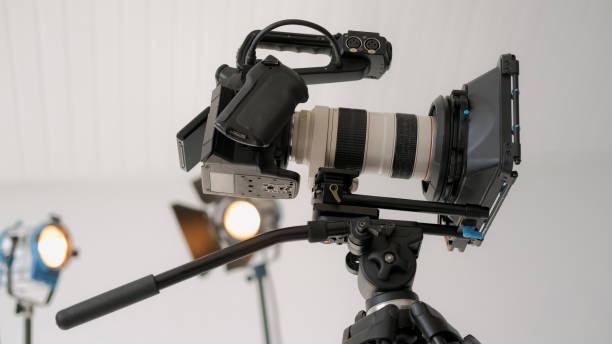
Film Grade Translation Elevates Short Drama Localization Worldwide
Traditional film and television teams carry instincts that pure volume short-drama factories often lack. They understand how a line lands with subtext, how silence carries weight, and how emotional architecture builds across scenes rather than in isolated bursts. When those same teams move into vertical short dramas—the 60- to 120-second episodes that now generate billions in global revenue—the constraints tighten dramatically. Hooks must land in the first few seconds. Cliffhangers arrive every minute or so. Cultural references that feel natural in one market can flatten or confuse in another. The difference between a title that retains viewers and one that loses them after the free episodes often comes down to localization that treats language as creative work rather than a downstream checkbox.
The numbers make the stakes clear. Media Partners Asia reported the non-China microdrama market at roughly $1.4 billion in 2024 and projected growth toward $9.5 billion by 2030 at a compound annual rate near 28 percent. The United States has led international revenue, with strong contributions from audiences drawn to romance, revenge, and CEO storylines. Platforms such as ReelShort, DramaBox, and others have scaled rapidly through a mix of translated Chinese-origin content and increasing local production. Yet industry observers repeatedly note that a large share of cross-border titles underperform when localization stays literal. Completion rates drop. Pay-per-episode conversion stalls. Customer acquisition costs rise because poorly adapted trailers and early episodes fail to convert interest into habit.
This is the core tension traditional teams face. Their production values and narrative craft raise the ceiling, but the short-form format and global distribution demand speed and cost control. Pure machine translation followed by light editing is fast and inexpensive. It also frequently produces dialogue that feels off—stiff phrasing, mismatched tone, or cultural logic that does not travel. Viewers notice within seconds on a phone screen. Full cinematic-style human adaptation, native voice talent, careful direction, and post-production polish deliver the emotional texture audiences expect from premium work, yet it multiplies budgets and timelines. Teams already carrying higher production costs than pure short-drama operations risk eroding margins if localization is treated as an afterthought.
The practical path sits between the extremes. Film-trained writers and directors already know how to protect character voice and emotional peaks. The shift is learning to compress that instinct into the vertical rhythm and to treat adaptation as rewrite rather than word-for-word conversion. A phrase signaling sarcasm or social pressure in one language needs an equivalent that carries the same bite and rhythm in another. Subtitles must respect the narrow safe zone on a 9:16 frame, platform UI elements, and reading speed on mobile. Dubbing benefits from attention to vocal texture and, where relevant, lip considerations that support immersion rather than break it. Cultural consultants or in-market reviewers help catch references that land awkwardly—family obligation dynamics, status mismatches, or humor registers that do not map cleanly.
Evidence from the field supports the investment. Culturally attuned localization has been linked to meaningful lifts in retention, in some accounts around 35 percent or higher for titles that previously underperformed. Better early-episode experience also feeds acquisition efficiency; properly localized trailers and opening content have been observed to reduce customer acquisition costs by 20 to 40 percent relative to weaker versions of the same material, holding media spend constant. These gains compound: higher retention supports stronger lifetime value, organic sharing, and lower long-term reliance on paid traffic. In markets where audiences are less tolerant of foreign-feeling dialogue, the quality threshold is especially unforgiving.
The global picture is not uniform. North American viewers often respond to polished emotional delivery and familiar tropes adapted with local flavor. Southeast Asian and Latin American markets show strong download growth and rising willingness to pay, yet benefit from themes and pacing tuned to regional preferences. Japan and Korea have their own narrative expectations around certain power dynamics and underdog stories. Local production is rising—by some measures a growing share of top international titles are filmed with local talent and settings—yet translated and adapted content still plays a major role, especially for platforms scaling rapidly across dozens of languages. The winners treat localization as infrastructure: consistent character voices across seasons, reusable cultural phrase resources, integrated quality metrics, and workflows that combine machine assistance for volume with human expertise on high-impact dialogue and marketing assets.
Cost control remains real. Hybrid approaches—machine translation post-editing for secondary material, fuller human adaptation and native talent for key emotional scenes and trailers—help teams stretch budgets without sacrificing the premium feel that justifies higher production values. Prioritizing languages and markets by revenue potential and cultural distance avoids scattershot expansion. Early involvement of localization partners during scripting and post-production reduces rework and launch delays that can cost promotional momentum.
For traditional film and television teams making the pivot, the opportunity is substantial. The short-drama format rewards the very strengths they already possess—craft, emotional precision, and production discipline—provided those strengths are translated into the new constraints of vertical storytelling and global audiences. Treating localization with the same seriousness as cinematography or sound design is what turns solid content into titles that travel, retain, and monetize.
Artlangs Translation brings more than two decades of specialized experience to exactly this challenge. The company works across 230-plus languages with a network of more than 20,000 professional linguists and has built a track record of strong results in video localization, short-drama subtitle work, game localization, multilingual dubbing for short dramas and audiobooks, and multilingual data annotation and transcription. Its integrated approach helps traditional teams and platforms balance speed, cost, and the cinematic quality that modern short-drama audiences increasingly expect.