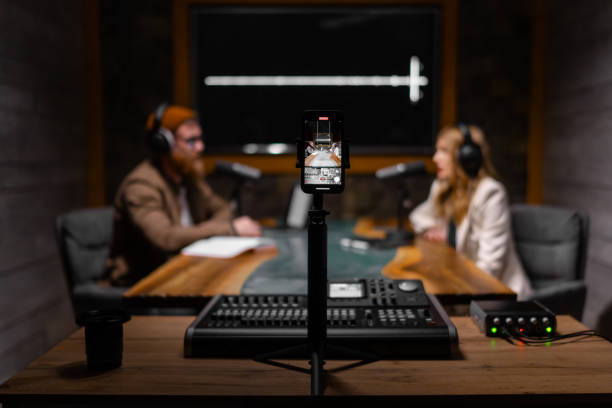
Dubbing, Listening, and Transcription: How Professional Services Tackle Noisy Audio in Indie Game Localization
Indie game developers pour countless hours into crafting immersive worlds, memorable characters, and dialogue that drives the story forward. Yet when it comes time to localize for international markets—especially through dubbing or voice-over work—the raw audio assets often arrive as messy field recordings, team interviews, or voice sessions captured in less-than-ideal conditions. Background hum from a home studio, overlapping developer feedback, heavy accents from global talent, or gaming-specific slang can turn what should be a straightforward transcription into a major headache.
The core challenge is precision under pressure. In multiplayer cutscenes, developer commentary tracks, or voice actor auditions, audio rarely comes clean. Multiple speakers interrupt each other, technical terms like “hitbox,” “lore drop,” or “procedural generation” get garbled, and regional dialects add another layer of complexity. Pure AI tools, while fast, frequently stumble here. Independent benchmarks from 2026 show that on clear studio audio, leading speech-to-text systems hit 95-98% accuracy. Drop in real-world noise, overlapping voices, or strong accents, and performance plummets—often landing between 60-85%, with some noisy multi-speaker scenarios dipping below 60%.
That gap matters enormously for game teams. A single mistranscribed term can ripple through the entire localization pipeline: wrong dialogue cues for dubbing artists, mismatched subtitles, or even altered narrative intent that confuses players in new languages. One common pain point is industry jargon. Developers and voice talent throw around abbreviations and insider phrases that generic models simply haven't encountered enough times in training data. The result? Subtle but costly substitutions that force later rework.
Efficiency becomes the next bottleneck. Manually transcribing one hour of challenging audio still takes most professionals 4-6 hours, sometimes longer when heavy review is needed for accuracy. AI can spit out a first draft in minutes, but the subsequent cleanup—listening repeatedly, correcting speaker attribution, fixing timing—often eats up nearly as much time as starting from scratch. Indie studios, already operating on tight budgets and schedules, can't afford that drag on post-production.
Then there's the format issue. Without precise timecodes synced to the audio, editors and dubbing directors waste hours scrubbing through timelines trying to locate a specific line. “Where was that emotional delivery at the 12-minute mark?” A clean, timestamped script turns raw footage into a searchable, actionable blueprint. Editors can jump directly to moments, dubbing teams match lip-sync or emotional beats perfectly, and quality assurance runs smoother because every note references an exact second.
This is where hybrid human-AI workflows shine, especially for materials destined for dubbing and listening-focused localization. Start with robust automated transcription to handle the bulk, then layer on expert human review. Professionals trained in audio forensics and linguistic nuance catch what algorithms miss: context from overlapping speech, the intent behind a thick accent that carries character flavor, or the exact pronunciation of made-up game terms. The outcome is a high-fidelity transcript with accurate speaker diarization, frame-accurate timecodes, and even keyword extraction or concise summaries that highlight key plot points or dialogue branches.
Real-world examples from the field illustrate the difference. In game post-production, timestamped transcripts have become essential for compliant editing and rapid iteration. They let teams mark selects, prototype cuts, and sync foreign dubs without losing the original rhythm—something pure automation rarely delivers reliably in chaotic recordings. Studies on conversational and multi-speaker audio consistently show that human oversight pushes overall accuracy toward 95-99%, even in tough conditions, while reducing clinically or creatively significant errors that could derail a project.
For accents and dialects, the advantage is even clearer. Many AI systems still show bias, with higher word error rates on non-standard English varieties or regional speech patterns. Human reviewers, drawing on cultural and linguistic expertise, preserve authenticity rather than flattening it. This matters deeply in indie games, where diverse voice talent often brings unique perspectives that enrich the final experience.
Beyond raw transcription, adding services like precise timecoding and keyword/summary extraction creates downstream value. Localization teams gain searchable scripts for quick reference. Dubbing directors receive timed guides that preserve pacing. And for short-form content like trailers or dev diaries, extracted highlights speed up marketing asset creation.
The best results come when transcription isn't treated as an isolated step but as the foundation for full audio localization. Accurate listening and dubbing preparation directly supports high-quality voice adaptation across languages, ensuring the game's emotional core survives translation.
At Artlangs Translation, we've spent over 20 years refining these exact processes for the games industry and beyond. Our team handles dubbing, listening, and transcription projects with a network of more than 20,000 professional collaborators, covering 230+ languages. We specialize in video localization, short drama subtitling, game localization, multilingual dubbing for short dramas and audiobooks, plus advanced data annotation and transcription services. Whether it's turning noisy multi-speaker developer interviews into polished, timecoded scripts or preparing heavy-accented voice assets for international dubbing, our hybrid approach—smart AI assistance backed by meticulous human calibration—delivers the precision indie creators need to reach global audiences without compromise.
If your next localization push involves challenging audio, the difference between “good enough” and truly immersive often starts at the transcription stage. Getting it right there saves time, protects creative intent, and ultimately helps your game resonate in every market it enters.