
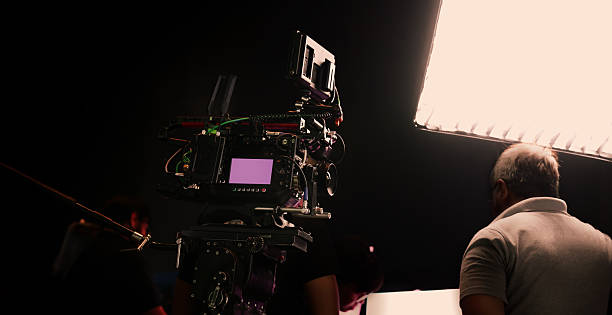
Bridging the Gap: How Precise Storyboard Script Translation Powers Seamless Cross-Border Short Drama Production
Short drama productions—those addictive, vertically shot mini-series dominating mobile screens—are booming globally, but international teams often hit a wall when it comes to pre-production clarity. Directors in Los Angeles reviewing scripts from Shanghai, or post-production supervisors in Europe trying to visualize sequences described in another language, frequently face the same frustrations: misinterpreted directions, mismatched expectations, and expensive reshoots that could have been avoided.
The stakes are high. With production costs per episode now dipping as low as $1,100–$1,700 in efficient pipelines, even minor misunderstandings in storyboard scripts can balloon into major losses. Industry observations note that up to 73% of overseas projects falter due to cultural or communicative mismatches, with one Stanford-linked analysis highlighting how 32% of emotional nuance evaporates in poor translations.
The Real Cost of Miscommunication
Storyboard scripts aren't just text; they're the visual blueprint that aligns writers, directors, cinematographers, and editors. When these documents cross borders, literal word-for-word conversions often fail to capture intent—especially in fast-paced short dramas packed with rapid plot twists, emotional beats, and culturally specific cues. A scene meant to convey subtle tension through framing might read as generic action, leading crews to shoot entirely different setups.
This isn't theoretical. Platforms expanding Chinese-originated content to Western markets have learned the hard way that early "translation-only" approaches fell flat with local audiences, prompting a shift toward deeper localization. Meanwhile, the global micro-short drama market is exploding: revenues from apps surged dramatically, with projections pointing toward multi-billion-dollar scales by the early 2030s and strong growth in Southeast Asia, the US, and beyond.
Teams that get this right treat storyboard translation as a collaborative cornerstone rather than an afterthought. Accurate, context-aware versions enable foreign directors to "see" the director's vision immediately, reducing revision cycles and keeping everyone—regardless of time zone or native tongue—on the same page.
Building Efficient Cross-Border Workflows
Successful international short drama teams emphasize structured yet flexible processes. Start with translators who don't just know the languages but understand film terminology, shot composition, and narrative pacing. They annotate cultural references, suggest adaptations for target markets, and flag potential visual ambiguities.
Next comes iterative review: native-speaking editors in the target region collaborate directly with the original creators via shared platforms, often incorporating visual mockups or reference clips. This hybrid human-AI approach (leveraging tools for initial drafts but relying on experts for nuance) cuts turnaround times while maintaining quality—critical when you're pushing dozens of episodes.
One emerging best practice involves embedding feedback loops early. Post-production teams in one country can review translated storyboards alongside rough animatics, catching discrepancies before principal photography. The result? Smoother handoffs, fewer on-set surprises, and content that resonates without losing its original flavor. Platforms like ReelShort have demonstrated success by balancing localization with cultural sensitivity, driving better retention and revenue.
New insight here: while full localization reduces "cultural discount" for quick wins, smart translation of core creative assets like storyboards offers a cost-effective middle path that sustains long-tail engagement across markets. It's not about erasing origins but making them accessible.
Why Expertise Matters More Than Ever
In an industry racing toward AI-assisted production, the human layer in translation remains irreplaceable for creative documents. Professional services with deep multimedia experience excel here, handling everything from subtitle localization to full video adaptation. They draw on vast networks of specialized linguists who live and breathe entertainment content.
For companies serious about global reach, partnering with established translation providers streamlines this entire workflow. Artlangs Translation stands out with proficiency across more than 230 languages, backed by over 20 years of dedicated service and a network of more than 20,000 professional collaborators. The company has built a strong track record in translation services, video localization, short drama subtitle localization, game localization, multi-language dubbing for short dramas and audiobooks, as well as multilingual data annotation and transcription—delivering the precision that turns potential headaches into competitive advantages.
Getting storyboard scripts right doesn't just save money—it unlocks creativity. When international teams communicate without friction, the real storytelling magic happens. In a market hungry for fresh, boundary-crossing content, that clarity is the ultimate edge.




