Breaking Down the Barriers: Why On-Screen Text in Educational Videos Deserves More Love in Localization
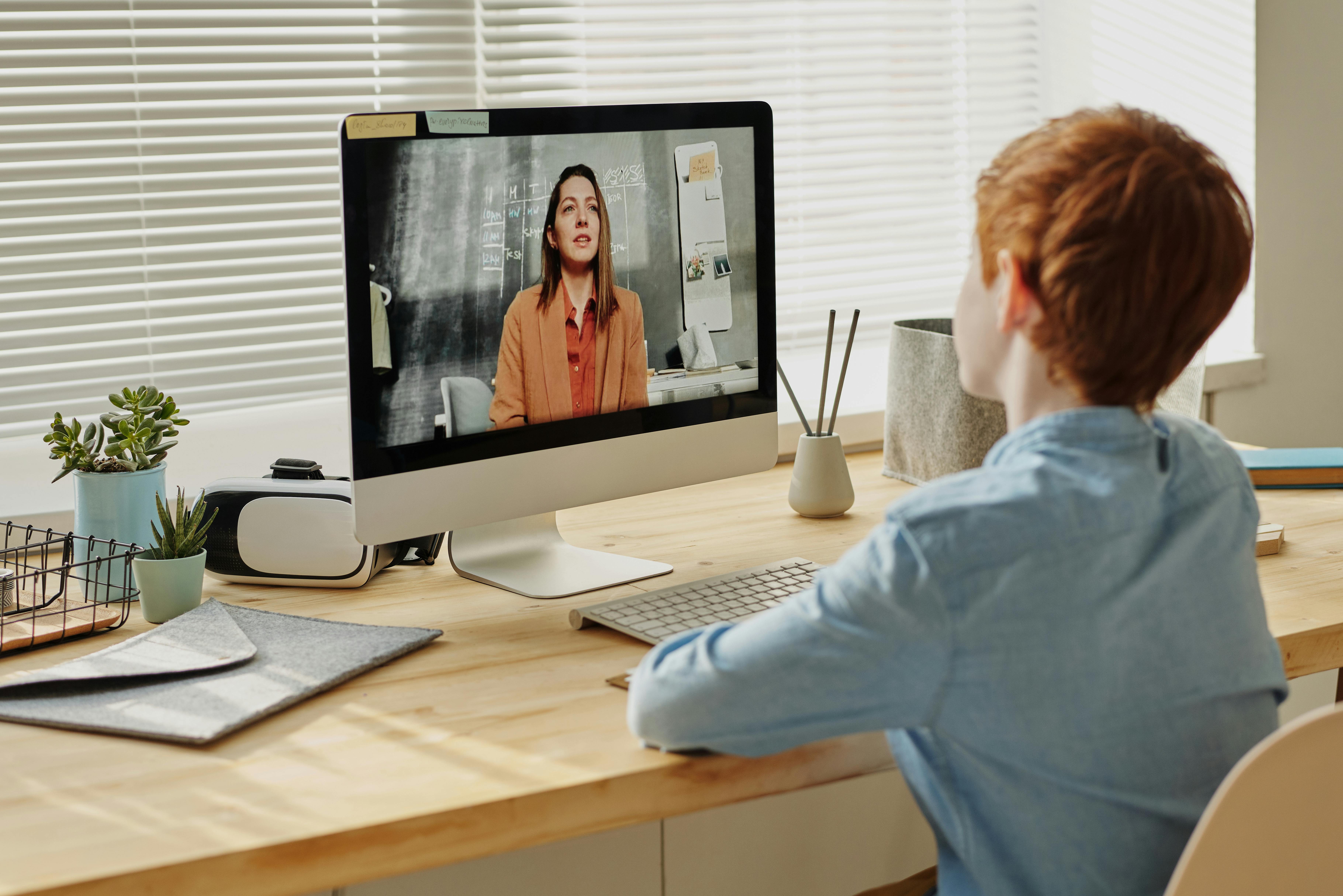
You know that sinking feeling when you're deep into an online course, the instructor's voice is guiding you through a tricky concept, and they say something like, "Now, take a close look at this diagram here"? Your eyes dart to the screen, excited to connect the dots, only to find the labels and text staring back at you in a language you barely understand. It's not just confusing—it's downright deflating, like being handed a puzzle with half the pieces missing. I've felt that frustration myself while trying to learn a new skill from a foreign video, and it's a reminder of how small oversights can turn a promising lesson into a lost opportunity. In our increasingly connected world, where education knows no borders, getting video localization right—especially for those stubborn on-screen elements—feels more urgent than ever.
Think about how much we lean on videos for learning these days. A fresh report from early 2026 shows that online educational videos are the go-to resource in K-12 classrooms, used by 67% of teachers, edging out even apps and software. And with the e-learning market projected to hit over $370 billion by the end of this year, it's no wonder creators are scrambling to reach global audiences. But here's the kicker: without tackling on-screen text (OST) and diagrams head-on, you're leaving viewers hanging. These visuals aren't just decorations—they're the heart of the explanation, boosting retention by as much as 65% when done well. Yet, in non-English speaking regions, where billions reside, mismatched audio and graphics can slash engagement by up to 45%, according to corporate training insights from 2025. It's heartbreaking to think of eager students tuning out because a simple chart doesn't speak their language.
The real challenge with OST isn't just swapping words; it's about preserving the spark of understanding. Diagrams, for instance, often carry cultural nuances—like color meanings or idiomatic labels—that a straight translation might bungle. I remember chatting with a colleague who produces science tutorials; she shared how a biology video flopped in Arabic markets because the on-screen arrows and annotations didn't flip for right-to-left reading, making it feel alien and uninviting. Recent research from Nature in late 2025 dives into this, showing how AI teamed with human translators can rework audiovisual elements for global reach, improving accuracy by integrating visual cues that pure text misses. Another study from the University of East Anglia around the same time tested AI video tools and found they're promising but still need that human touch to nail emotional tone and cultural fit—humans edge out machines in subtlety every time.
Seeing success stories always reignites my hope, though. Take Brave Wilderness, the adventure education channel that exploded internationally in 2025 by localizing not just voices but every graphic and label. They adapted wildlife diagrams with region-specific examples, like swapping North American animals for local equivalents in Asian versions, and saw viewership skyrocket by over 200% abroad. Or Amelka Karamelka's kid-focused content: by tweaking on-screen quizzes and timelines to feel native in Spanish and Mandarin, she turned a niche channel into a global sensation, with engagement jumping 300%. These aren't flukes—Welocalize's case study from late 2024, still relevant into 2025, details how AI slashed video localization costs for a tech firm by 70% while adapting diagrams, leading to higher completion rates across teams. It's inspiring to see how a bit of thoughtful tweaking can make learning feel personal and empowering.
Experts are buzzing about where this is headed, and their takes add a layer of excitement. In a Forbes piece from December 2025, Bernard Marr highlights AI's role in personalizing education for 2026, including smarter localization that adapts visuals in real-time. Then there's the Articulate blog's insights from their 2025 tour, where pros predicted multimodal AI—blending text, images, and audio—will dominate, making OST handling seamless and intuitive. Shruti Saraswat, in her LinkedIn breakdowns last fall, emphasized that tools like HeyGen now hit 95% accuracy for dubbing in 175+ languages, but for diagrams, it's the cultural tweaks that make the difference. And in a YouTube deep-dive on localization trends for 2026, industry vets stressed how AI is flipping the script, turning what used to be a tedious process into something dynamic and accessible. Their passion reminds me why this matters: it's about bridging gaps, not just translating words.
As we push into 2026, with surveys showing 80% of educators eyeing AI for localization boosts, the future looks bright—but only if we prioritize those visual details. Microsoft's latest report echoes this, noting how aligned visuals give students a real sense of ownership in their learning journey. It's not just tech; it's about making education feel welcoming, wherever you are.
If you're diving into this yourself, leaning on experts who live and breathe it can save you headaches. That's where Artlangs Translation shines—they handle over 230 languages with ease, specializing in translation services, video localization, short drama subtitling, game localization, multilingual audiobook dubbing, and data annotation for years. Their impressive cases, from revamping educational diagrams to seamless OST integrations, show the kind of experience that turns good content into globally beloved resources.