
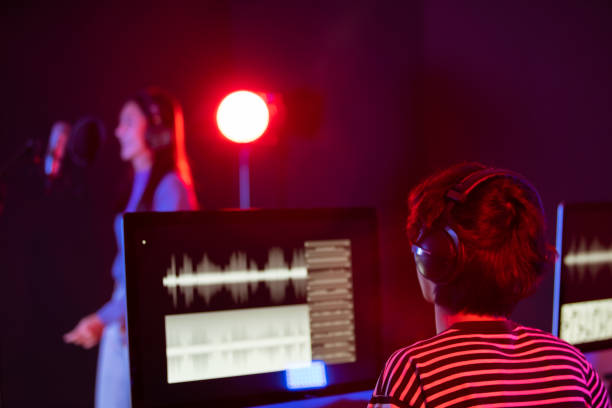
Achieving 99% Accuracy in Dubbing, Listening, and Transcription: How to Handle Noisy Backgrounds, Multi-Person Interviews, and Heavy Accents
Producing accurate transcripts from real-world audio is rarely straightforward. A single hour of panel discussion, client interview, or field recording can leave even experienced teams drowning in misheard jargon, overlapping voices, and background distractions that turn “industry shorthand” into gibberish. The fallout is predictable: terminology slips that undermine an entire strategy deck, editors stuck scrubbing through hours of footage without timestamps, and post-production timelines stretched to the breaking point because one hour of source material demands four to six hours of manual cleanup.
Yet 99% accuracy isn’t a pipe dream. It’s the standard that professional dubbing, listening, and transcription teams consistently deliver when they combine the right technology with targeted human expertise. The difference lies in understanding exactly where automated tools break down—and how to fix those gaps without inflating costs or timelines.
Why noisy, multi-speaker, or accented audio still defeats most automated systems
Recent benchmarks paint a clear picture. In clean studio conditions, top-tier speech-to-text models hover around 90–96% accuracy. Drop in background noise, cross-talk from multiple speakers, or a heavy regional accent, and that figure routinely falls to 70–85%. One 2025 independent comparison showed AI handling noisy multi-speaker files at 85–92% at best, while human-reviewed work consistently cleared 95–98% and often reached 99%+. Even OpenAI’s Whisper large-v3, which outperformed human listeners in some controlled noise tests, only matched people in realistic pub-style environments with overlapping speech.
Accents and dialects widen the gap further. Studies tracking African American Vernacular English, Appalachian English, and non-native varieties have documented error rates nearly double those for “standard” American speech. The same pattern appears with Indian English, British regional accents, and code-switching in multilingual settings. Industry jargon compounds the problem: an abbreviation that sounds obvious to insiders becomes a complete miss for any model lacking domain-specific training data.
These aren’t edge cases. They’re the daily reality of podcast production, corporate training videos, short dramas, game voice-overs, and international market research interviews.
The practical fixes that actually reach 99%
Professional teams no longer choose between “fast and cheap AI” or “slow and expensive humans.” They run a layered process:
High-precision initial transcription with speaker-aware modelsModern pipelines use noise suppression, voice activity detection, and speaker diarization to separate overlapping voices before transcription even begins. This step alone cuts raw error rates dramatically in noisy conference rooms or busy field recordings.
Targeted manual proofreading for dialects, heavy accents, and specialized terminologyNative linguists who live and breathe the relevant accent or industry review the output. They catch the nuances AI still misses—subtle vowel shifts in regional dialects, context-specific slang, or the exact meaning of a niche abbreviation. This human layer is what consistently pushes accuracy from the 85–92% zone into the 99% range.
Precise timecodes baked in from the startEvery spoken segment carries an exact timestamp down to the frame. Editors can click a line in the script and jump straight to the moment in the video or audio file. No more guessing. No more wasted hours hunting for a 12-second clip. Timecoded scripts have become non-negotiable for subtitle localization, dubbing alignment, and compliance-heavy projects.
Keyword and summary extraction as standard deliverablesOnce the transcript is locked, the same team pulls out searchable keywords, action items, and concise executive summaries. This turns raw material into immediately usable assets for content strategy, SEO, or training modules—without an extra round of review.
The efficiency gain is measurable. Where solo manual transcription often requires a 4:1 to 6:1 time ratio (four to six hours of work per hour of audio), the hybrid model compresses that dramatically. Professional services routinely return clean, timecoded transcripts and keyword summaries in a fraction of the time, freeing editors and producers to focus on creative work instead of damage control.
Real-world proof that the hybrid approach works
Independent research keeps confirming what production teams have observed for years. A 2025 University of Zurich study comparing leading ASR systems to human listeners found that even the strongest models still lose ground in naturalistic noisy settings with overlapping speech. Another large-scale audit of commercial systems showed non-American accents triggering 2–12 percentage point higher word error rates—gaps that vanish once expert human review is added. These findings aren’t theoretical; they mirror the daily experience of video localization houses and game studios working across 20+ language pairs.
Why this matters for your next project
When terminology errors can sink a marketing campaign or delay a game release, settling for “good enough” transcription isn’t an option. The same goes for dubbing scripts that need to sync perfectly with lip movements or subtitle files that must be searchable and editable on tight deadlines.
Teams that treat dubbing, listening, and transcription as a specialized craft—rather than a background task—consistently hit tighter schedules and higher quality. They deliver transcripts that don’t just capture words but preserve intent, tone, and technical precision across noisy environments, multi-person conversations, and every accent under the sun.
For organizations that need this level of reliability at scale, the clearest path is partnering with specialists who have spent decades refining exactly these workflows. Artlangs Translation brings more than 20 years of focused experience in translation services, video localization, short drama subtitle localization, game localization, audiobook multi-language dubbing, and multi-language data annotation and transcription. Backed by a global network of over 20,000 professional translators and linguists fluent in 230+ languages, they turn challenging source material into polished, timecoded, and fully verified deliverables—exactly the precision that modern multimedia projects demand.




